
You’ve decided to lose weight, but you’re staring at your kitchen wondering what the hell you’re supposed to eat. Every diet seems to require exotic ingredients you’ve never heard of, complicated recipes that take hours, or meals that leave you hungry two hours later.
- How This Plan Works
- Your Complete Shopping List
- Meal Prep Strategy
- Day 1 Meal Plan
- Day 2 Meal Plan
- Day 3 Meal Plan
- Day 4 Meal Plan
- Day 5 Meal Plan
- Day 6 Meal Plan
- Day 7 Meal Plan
- Making This Work Long-Term
- Common Adjustments
- What to Expect
- Troubleshooting Issues
- When to Contact a Professional
- The Bottom Line
- Frequently Asked Questions
You need something practical. A plan that uses normal grocery store ingredients, doesn’t require culinary school training, and actually keeps you full enough to stick with it. You want to know exactly what to eat for breakfast, lunch, dinner, and snacks without having to figure it out every single day.
That’s what this weight loss 7 day meal plan delivers. Real food that normal people actually eat, portions that create a calorie deficit without starvation, and enough variety that you won’t get bored by day three. No juice cleanses, no cabbage soup for a week straight, no eliminating entire food groups.
This plan provides approximately 1,500 calories daily for women and 1,800 for men, creating a reasonable deficit that produces 1-2 pounds of weight loss weekly for most people. The meals balance protein to preserve muscle and control hunger, complex carbohydrates for energy and satisfaction, healthy fats for satiety and hormone function, and plenty of vegetables for volume, nutrients, and fiber.
You’ll get a complete shopping list organized by store section, meal prep instructions to save time during the week, simple recipes that don’t require advanced cooking skills, and flexibility to swap foods based on your preferences or what’s available. This isn’t about perfection. It’s about having a clear roadmap that removes the daily decision fatigue of figuring out what to eat.
“Meal planning is one of the most effective strategies for weight loss success. People who plan their meals in advance lose more weight and maintain that loss better than those who make daily food decisions without structure.”
How This Plan Works
Understanding the principles behind this meal plan helps you use it effectively and adjust it to your individual needs.
The calorie target of 1,500 for women and 1,800 for men creates a deficit for most adults without being so restrictive that you feel miserable or lose muscle mass. These numbers work for people with moderate activity levels who maintain weight at roughly 2,000-2,500 calories.
If you’re very active or have a larger body size, you might need to add 200-300 calories through larger portions or extra snacks. If you’re smaller or sedentary, you might need slightly less. The plan provides a starting point that works for many people.
Protein intake sits at roughly 100-120 grams daily, which supports muscle preservation during weight loss and helps control hunger better than low-protein diets. Each meal contains 25-35 grams of protein to keep you satisfied between eating occasions.
Carbohydrates come primarily from whole grains, fruits, and vegetables rather than refined sources like white bread or sugary snacks. This provides sustained energy without blood sugar crashes that trigger cravings and overeating.
Fat intake includes sources like olive oil, avocado, nuts, and fatty fish that provide satiety and support hormone production. Keeping some fat in the diet prevents the hunger and misery that often derails very low-fat approaches.
Meal timing spreads eating across three main meals plus one or two snacks. This pattern works well for most people’s schedules and hunger patterns, though you can adjust timing to fit your lifestyle. Some people skip breakfast and eat larger lunches and dinners. Others need morning food to function.
The specific timing matters less than the total daily intake and having structure that prevents grazing or making poor decisions when overly hungry.
Flexibility built into the plan allows substitutions based on preferences, allergies, or what’s available at your store. Don’t like salmon? Use chicken breast or extra-firm tofu. Can’t find a specific vegetable? Swap in something similar. The meals aren’t magical combinations that only work exactly as written.
Portion sizes are specified to hit calorie targets, but you’ll need to adjust based on your actual needs and hunger levels. If you’re legitimately hungry and losing weight too quickly, add more food. If you’re not losing after 2-3 weeks, portions might be larger than intended.
The plan emphasizes whole foods you prepare yourself rather than processed diet products. Real chicken breast, actual vegetables, whole grains. This approach provides better nutrition, more satiety per calorie, and builds cooking skills that support long-term success.
However, some convenience items like pre-cut vegetables, rotisserie chicken, or frozen vegetables make sense if they help you actually follow the plan. Perfect home cooking beats convenient options nutritionally, but convenient options that you’ll actually use beat perfect foods that stay in your fridge until they rot.
Core principles of this plan:
- Calorie deficit through portion control, not food elimination
- High protein to preserve muscle and control hunger
- Whole food emphasis for nutrition and satiety
- Practical recipes using common ingredients
- Built-in flexibility for personal preferences
- Meal prep strategies to reduce daily effort
- Sustainable approach you can maintain beyond 7 days
This isn’t a quick fix or crash diet. It’s a template for eating in a calorie deficit while feeling reasonably satisfied, getting adequate nutrition, and developing habits that support long-term weight management.
Your Complete Shopping List
Having everything you need before starting prevents mid-week grocery runs that often lead to buying junk food. This list covers all meals and snacks for the full 7 days.
| Category | Items to Buy | Quantity |
|---|---|---|
| Proteins | Chicken breast, Ground turkey (93% lean), Salmon fillets, Eggs, Greek yogurt (plain, nonfat), Cottage cheese (low-fat) | 2 lbs chicken, 1 lb turkey, 3 salmon fillets (6 oz each), 18 eggs, 2 large containers yogurt, 1 container cottage cheese |
| Grains & Starches | Oatmeal (old-fashioned), Brown rice, Whole wheat bread, Sweet potatoes, Quinoa | 1 large canister oats, 2 lb bag rice, 1 loaf bread, 4 medium sweet potatoes, 1 lb quinoa |
| Vegetables | Spinach, Mixed greens, Broccoli, Bell peppers (various colors), Cherry tomatoes, Cucumbers, Carrots, Onions, Garlic, Zucchini | 2 bags spinach, 1 large container greens, 2 heads broccoli, 4 bell peppers, 2 pints cherry tomatoes, 3 cucumbers, 1 lb carrots, 2 onions, 1 bulb garlic, 3 zucchini |
| Fruits | Bananas, Apples, Berries (fresh or frozen), Oranges | 7 bananas, 5 apples, 2 containers berries, 4 oranges |
| Dairy | Skim or 1% milk, Part-skim mozzarella cheese, Feta cheese (optional) | 1/2 gallon milk, 8 oz mozzarella, 4 oz feta |
| Fats & Oils | Olive oil, Almond butter (or peanut butter), Avocados, Raw almonds | 1 bottle olive oil, 1 jar nut butter, 3 avocados, 1 bag almonds |
| Pantry Staples | Black beans (canned), Diced tomatoes (canned), Low-sodium chicken broth, Balsamic vinegar, Lemon juice, Honey, Dijon mustard | 2 cans black beans, 2 cans tomatoes, 1 carton broth, 1 bottle vinegar, Fresh lemons, Small bottle honey, 1 jar mustard |
| Seasonings | Salt, Black pepper, Garlic powder, Onion powder, Paprika, Italian seasoning, Cumin, Chili powder | Check pantry, buy if needed |
Shopping tips to save time and money:
- Buy chicken and turkey in bulk, freeze what you won’t use in 3-4 days
- Frozen vegetables work just as well nutritionally and prevent waste
- Pre-washed greens cost more but save time if that helps you stick with the plan
- Store brands of staples like rice, oats, and canned goods are usually identical to name brands
- Buy seasonal produce for better prices and flavor
- Rotisserie chicken from the deli can substitute for cooking chicken breast if time is limited
Expect to spend roughly $80-120 for the week depending on where you shop and what you already have in your pantry. This might seem like a lot compared to your current spending, but it likely replaces restaurant meals, takeout, and impulse snack purchases that cost more while providing less nutrition.
Meal Prep Strategy
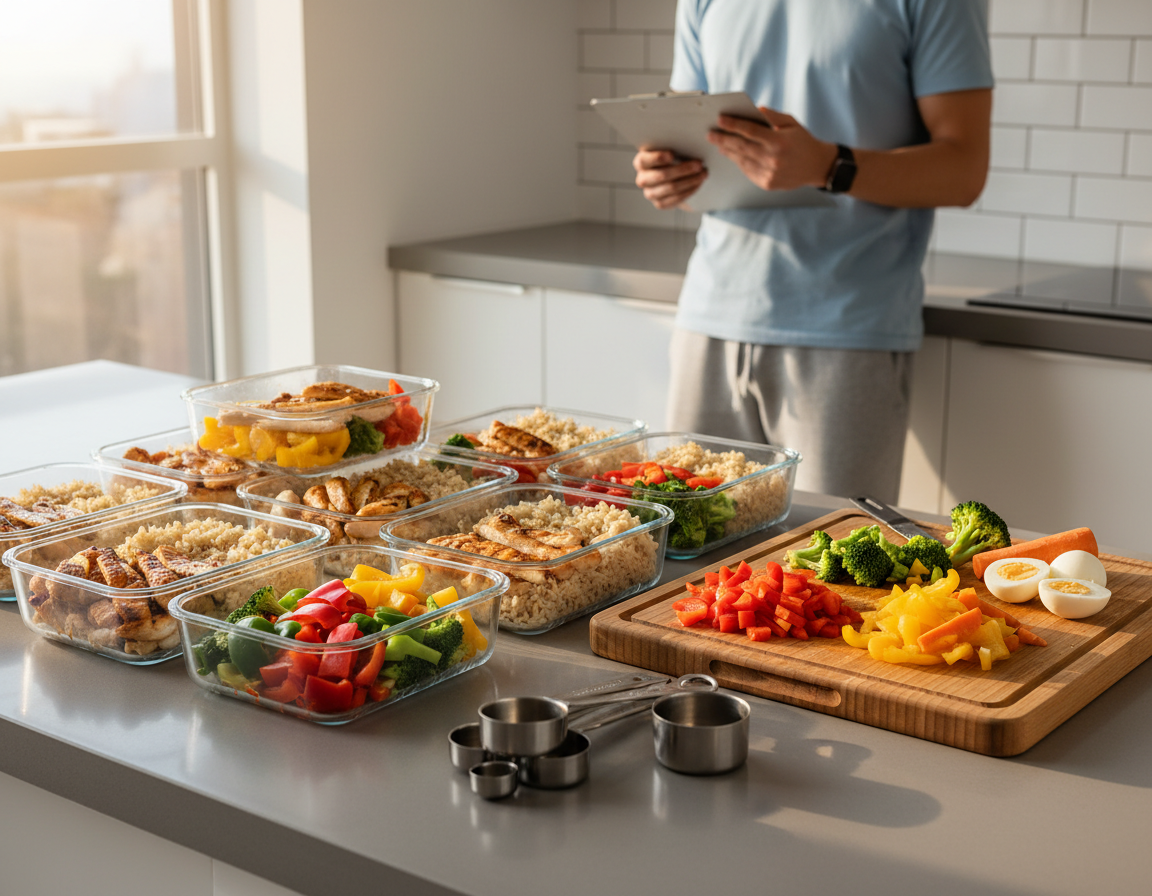
Spending 2-3 hours on Sunday prepping components makes weekday meals quick and removes the decision fatigue that leads to ordering pizza.
Sunday prep tasks:
Cook all chicken breast at once. Season with salt, pepper, and garlic powder, then bake at 375°F for 25-30 minutes until internal temperature reaches 165°F. Let cool, then portion into containers for the week.
Cook brown rice in large batch. Make 4-5 cups cooked rice, portion into containers. Rice keeps 4-5 days refrigerated or can be frozen for later in the week.
Prep all vegetables. Wash and chop bell peppers, cucumber, carrots. Store in airtight containers. Wash spinach and greens if not pre-washed. Keep broccoli whole until ready to cook.
Hard boil a dozen eggs. These serve as quick protein snacks or breakfast components. Properly cooked eggs keep 7 days refrigerated.
Cook quinoa if using. Similar to rice, make a large batch and portion for multiple meals.
Portion snacks into grab-and-go containers. Measure almonds into small containers or bags, portion Greek yogurt if buying large containers, cut vegetables into snack-size pieces.
Storage tips:
Use glass containers when possible for reheating. They don’t absorb smells or stain like plastic and are microwave-safe.
Label containers with contents and day if it helps you stay organized. Knowing Tuesday’s lunch is already portioned removes thinking.
Store proteins on the bottom shelf of the refrigerator where it’s coldest. This prevents spoilage and keeps meat safe.
Keep cut vegetables in containers with slightly damp paper towels. This maintains crispness and prevents wilting.
Freeze half of what you prep if you’re concerned about food going bad mid-week. Defrost as needed.
What to prep fresh:
Eggs for breakfast should be cooked fresh each morning or the night before for best texture and taste.
Salads should be assembled just before eating. Keep components separate to prevent sogginess.
Avocados brown quickly. Cut these fresh rather than storing cut pieces.
Fish tastes best cooked fresh. Prep marinades but cook salmon the day you’ll eat it.
The goal isn’t cooking every single meal in advance. It’s preparing components that make putting meals together during the week take 10-15 minutes instead of 45 minutes from scratch.
Day 1 Meal Plan
Starting strong on day one sets the tone for the week. These meals provide balanced nutrition while keeping you satisfied.
Breakfast: Protein Oatmeal Bowl (400 calories)
Cook 1/2 cup dry oatmeal with 1 cup water or milk. Stir in 1 scoop vanilla protein powder or 1/2 cup cottage cheese after cooking. Top with 1/2 sliced banana, 1 tablespoon almond butter, and cinnamon. This combination provides 30g protein, complex carbs for energy, and healthy fats for satiety that lasts until lunch.
Mid-Morning Snack: Greek Yogurt with Berries (150 calories)
3/4 cup nonfat plain Greek yogurt topped with 1/2 cup fresh or frozen berries. Add a drizzle of honey if you need slight sweetness. The protein from yogurt prevents mid-morning hunger while berries provide antioxidants and fiber with minimal calories.
Lunch: Mediterranean Chicken Salad (450 calories)
4 oz grilled chicken breast over 2 cups mixed greens, 1/2 cup cherry tomatoes, 1/4 cup cucumber, 2 tablespoons crumbled feta, 10 olives. Dress with 1 tablespoon olive oil mixed with balsamic vinegar and lemon juice. The high volume from greens fills you up while chicken provides substantial protein. Olives and feta add satisfying fat and flavor.
Afternoon Snack: Apple with Almond Butter (200 calories)
1 medium apple sliced with 1 tablespoon almond butter. The fiber in apple combined with protein and fat from nut butter creates lasting satisfaction and prevents energy crashes.
Dinner: Baked Salmon with Roasted Vegetables (500 calories)
6 oz salmon fillet seasoned with lemon, garlic, and herbs, baked at 400°F for 12-15 minutes. Serve with 1 cup roasted broccoli and 1 medium roasted sweet potato. Toss vegetables with 1 teaspoon olive oil before roasting. Salmon provides omega-3 fats and high-quality protein while sweet potato offers complex carbs and the vegetables add bulk and nutrients.
Daily Total: 1,700 calories, 125g protein, 160g carbs, 55g fat
The first day might feel like a lot of food compared to restrictive diets. That’s intentional. Sustainable weight loss doesn’t require starving yourself. These portions create a deficit while providing enough food to function normally.
Day 2 Meal Plan
Breakfast: Veggie Egg Scramble with Toast (380 calories)
2 whole eggs plus 2 egg whites scrambled with 1 cup spinach, 1/4 cup diced bell pepper, 1/4 cup diced onion. Serve with 1 slice whole wheat toast with 1 teaspoon butter. This breakfast packs vegetables into your morning while eggs provide protein that controls hunger for hours.
Mid-Morning Snack: Cottage Cheese with Cucumber (120 calories)
1/2 cup low-fat cottage cheese with sliced cucumber and a sprinkle of black pepper or everything bagel seasoning. The high protein content of cottage cheese makes it one of the most satisfying snacks per calorie.
Lunch: Turkey and Avocado Wrap (460 calories)
Whole wheat tortilla with 4 oz sliced turkey breast, 1/4 avocado, lettuce, tomato, mustard. Side of baby carrots. The wrap format makes lunch portable while providing balanced macros that keep energy steady through the afternoon.
Afternoon Snack: Protein Smoothie (180 calories)
Blend 1/2 cup frozen berries, 1/2 banana, 1/2 cup Greek yogurt, 1/2 cup unsweetened almond milk, handful of spinach. The spinach disappears in flavor but adds nutrients and volume. Frozen fruit creates thick texture without ice.
Dinner: Turkey Quinoa Bowl (550 calories)
1 cup cooked quinoa topped with 5 oz seasoned ground turkey (cooked with cumin, chili powder, garlic), 1/2 cup black beans, 1/4 avocado, salsa, mixed greens. This bowl combines protein from turkey, complete protein from quinoa, fiber from beans, and healthy fats from avocado.
Daily Total: 1,690 calories, 130g protein, 155g carbs, 50g fat
Day two introduces different protein sources and preparation methods to prevent monotony. The variety in flavors and textures makes the plan more sustainable.
Day 3 Meal Plan
Breakfast: Banana Protein Pancakes (410 calories)
Mash 1 banana and mix with 2 eggs and 1/4 cup oats. Cook like pancakes. Top with 1/4 cup Greek yogurt and 1/2 cup berries. These pancakes feel indulgent while providing protein and whole grains. They’re also easy to batch cook and reheat.
Mid-Morning Snack: Hard-Boiled Eggs and Orange (160 calories)
2 hard-boiled eggs with 1 small orange. Simple, portable, and provides protein plus vitamin C. Keep hard-boiled eggs ready for quick snacks throughout the week.
Lunch: Chicken and Vegetable Stir-Fry over Rice (470 calories)
4 oz chicken breast stir-fried with 2 cups mixed vegetables (broccoli, bell peppers, snap peas, carrots) in 1 teaspoon sesame or olive oil with garlic and ginger. Serve over 1/2 cup cooked brown rice with low-sodium soy sauce. Stir-fries pack massive vegetable volume that fills you up.
Afternoon Snack: Celery with Almond Butter (150 calories)
4 celery stalks with 1 tablespoon almond butter. The crunch of celery satisfies the desire to chew while nut butter provides staying power.
Dinner: Baked Chicken with Roasted Brussels Sprouts (520 calories)
5 oz baked chicken breast seasoned with Italian herbs, served with 2 cups roasted Brussels sprouts and 1 small baked sweet potato. Roast Brussels sprouts with 1 teaspoon olive oil until crispy. The crispy texture of well-roasted vegetables makes them much more appealing than steamed or boiled.
Daily Total: 1,710 calories, 128g protein, 162g carbs, 52g fat
Day 4 Meal Plan
Breakfast: Greek Yogurt Parfait (390 calories)
Layer 1 cup nonfat Greek yogurt with 1/2 cup granola (measure carefully, granola is calorie-dense), 1/2 cup mixed berries, 1 tablespoon honey. This breakfast feels like dessert while providing substantial protein to start your day.
Mid-Morning Snack: Almonds and Apple (180 calories)
1 small apple with 15 almonds. Keep pre-portioned almond servings in bags so you don’t mindlessly eat from a large container.
Lunch: Tuna Salad Stuffed Avocado (450 calories)
Mix 1 can tuna (packed in water, drained) with 1 tablespoon Greek yogurt, diced celery, onion, lemon juice, pepper. Stuff into 1/2 large avocado. Serve with cucumber slices and cherry tomatoes. Using avocado as the vessel eliminates need for bread while providing healthy fats.
Afternoon Snack: Protein Shake (160 calories)
1 scoop protein powder blended with 1 cup unsweetened almond milk, ice. Sometimes a simple shake between lunch and dinner prevents arriving at dinner ravenous.
Dinner: Beef and Vegetable Skillet (560 calories)
5 oz extra-lean ground beef (95% lean) cooked with 1 cup diced bell peppers, 1 cup diced zucchini, 1 cup diced tomatoes, garlic, Italian seasoning. Serve over 1/2 cup cooked quinoa. One-pan meals simplify cooking and cleanup.
Daily Total: 1,740 calories, 135g protein, 150g carbs, 58g fat
Day 5 Meal Plan
Breakfast: Spinach and Feta Egg Muffins (370 calories)
Make ahead by mixing 6 eggs with 2 cups chopped spinach and 1/4 cup crumbled feta, pour into muffin tin, bake at 350°F for 20 minutes. Eat 3 muffins for breakfast. These keep several days and make grab-and-go breakfasts effortless.
Mid-Morning Snack: Cottage Cheese with Berries (140 calories)
1/2 cup low-fat cottage cheese with 1/2 cup berries. Repeat snacks that work. No need for variety in every single eating occasion.
Lunch: Chicken Caesar-Style Salad (480 calories)
4 oz grilled chicken breast over 2 cups romaine lettuce with 2 tablespoons shaved Parmesan, whole wheat croutons (1/4 cup), light Caesar dressing (2 tablespoons). The croutons and dressing make this feel less like diet food while staying within calorie targets.
Afternoon Snack: Veggies and Hummus (170 calories)
Sliced bell peppers, carrots, and cucumber with 3 tablespoons hummus. The combination of vegetables and hummus provides satisfying crunch and creaminess.
Dinner: Baked Cod with Green Beans and Rice (540 calories)
6 oz cod fillet baked with lemon and herbs at 400°F for 12 minutes. Serve with 1.5 cups green beans sautéed with garlic and 1/2 cup brown rice. White fish provides lean protein while being mild enough for people who don’t love strong fish flavors.
Daily Total: 1,700 calories, 132g protein, 158g carbs, 48g fat
Day 6 Meal Plan
Breakfast: Protein Smoothie Bowl (400 calories)
Blend 1 frozen banana, 1/2 cup frozen berries, 1 scoop protein powder, 1/2 cup Greek yogurt, splash of milk to desired consistency. Pour into bowl and top with 2 tablespoons granola, fresh berries, 1 tablespoon chia seeds. Smoothie bowls feel special and the toppings add texture variety.
Mid-Morning Snack: String Cheese and Grapes (150 calories)
2 part-skim mozzarella string cheese sticks with 1 cup grapes. Simple snack that combines protein and fruit.
Lunch: Turkey Chili (470 calories)
Cook ground turkey with diced tomatoes, black beans, bell peppers, onions, chili powder, cumin. Serve 1.5 cups chili topped with 2 tablespoons shredded cheese and Greek yogurt (instead of sour cream). Make a large batch, this freezes well for future meals.
Afternoon Snack: Rice Cake with Nut Butter (180 calories)
2 brown rice cakes with 1 tablespoon almond butter and sliced banana. Rice cakes provide crunch with minimal calories.
Dinner: Chicken Fajita Bowl (550 calories)
4 oz grilled chicken strips with sautéed bell peppers and onions, served over 1/2 cup brown rice with 1/4 cup black beans, salsa, 1/4 avocado, lime juice. All the flavors of fajitas without the tortilla calories.
Daily Total: 1,750 calories, 140g protein, 165g carbs, 50g fat
Day 7 Meal Plan
Breakfast: Avocado Toast with Egg (410 calories)
1 slice whole wheat bread toasted, topped with 1/2 mashed avocado, 2 fried eggs, cherry tomatoes, everything bagel seasoning. This Instagram-worthy breakfast provides healthy fats, protein, and complex carbs.
Mid-Morning Snack: Greek Yogurt with Almonds (170 calories)
3/4 cup nonfat Greek yogurt with 10 almonds and a drizzle of honey. Combining yogurt with nuts provides both protein and satisfying crunch.
Lunch: Salmon Salad (460 calories)
4 oz cooked salmon (use leftover from earlier in week or cook fresh) over mixed greens with cucumber, cherry tomatoes, red onion, 1/4 avocado. Dress with lemon juice and 1 teaspoon olive oil. Salmon provides omega-3 fats that support overall health.
Afternoon Snack: Apple Slices with Cheese (160 calories)
1 medium apple sliced with 1 oz cheddar cheese. The classic apple and cheese combination satisfies sweet and savory cravings simultaneously.
Dinner: Turkey Meatballs with Zoodles (540 calories)
Make meatballs from 6 oz ground turkey mixed with egg, breadcrumbs, Italian seasoning. Bake and serve over spiralized zucchini (3 cups) with marinara sauce (1/2 cup) and 2 tablespoons Parmesan. Zucchini noodles provide massive volume with minimal calories.
Daily Total: 1,740 calories, 128g protein, 155g carbs, 55g fat
By day seven, you should have a good sense of how your body responds to this eating pattern. Some people find they need slightly more food, others feel satisfied with these portions. Adjust as needed for your individual response.
Making This Work Long-Term
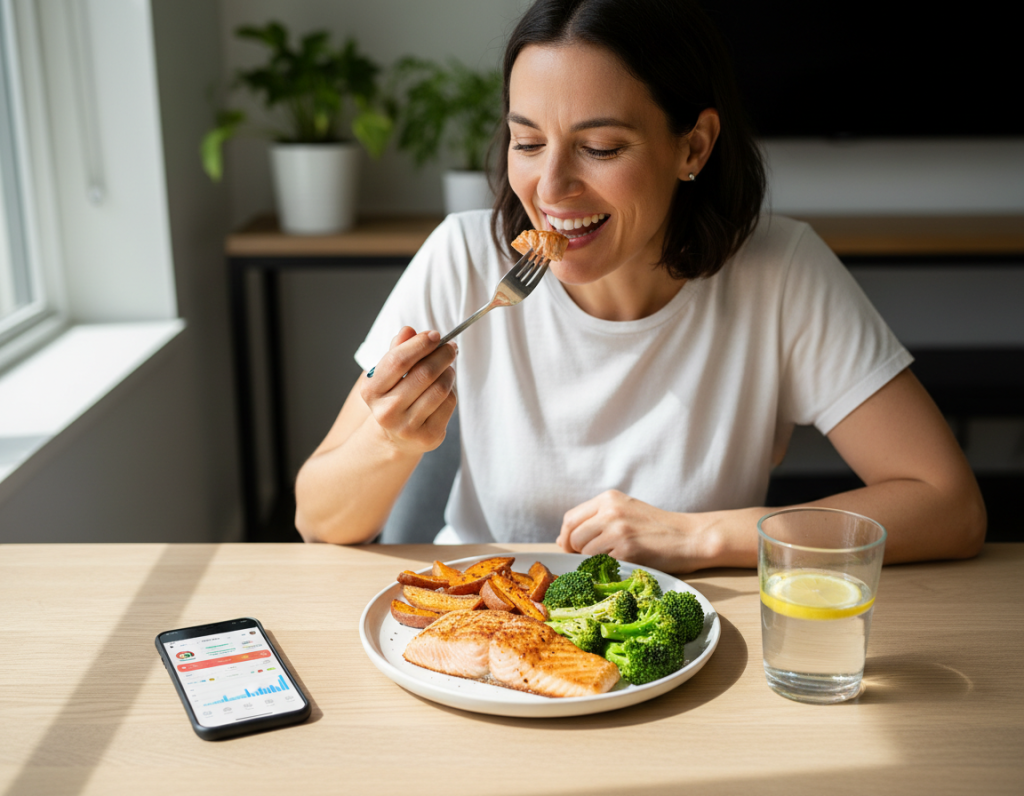
Seven days gives you experience with structured eating, but lasting weight loss requires extending these principles beyond one week.
The meals in this plan provide a template you can rotate and modify indefinitely. Repeat favorite days, swap proteins, try different vegetables, experiment with seasonings. You don’t need 365 unique meal plans to lose weight successfully.
Many people cycle through 2-3 weeks of meal plans repeatedly. Familiarity with recipes makes shopping and prep more efficient while still providing enough variety to prevent boredom.
As you lose weight, your calorie needs decrease slightly. Someone maintaining 200 pounds requires more calories than the same person at 160 pounds. Every 10-20 pounds lost, reassess your intake and adjust portions if weight loss stalls.
Weight loss isn’t linear. Some weeks you’ll lose 2 pounds. Others you’ll lose nothing despite perfect adherence. Water retention from sodium, hormones, intense exercise, or dozens of other factors affects scale weight day-to-day and week-to-week.
The trend over 4-6 weeks matters more than individual weigh-ins. If the overall direction is downward, you’re succeeding even if progress feels slow.
Hunger levels should be manageable with these portions. Feeling slightly hungry before meals is normal. Feeling ravenous, lightheaded, or obsessed with food suggests your portions are too small. Increase serving sizes by 10-20% and monitor results.
Conversely, if you’re not losing weight after 3-4 weeks of consistent adherence, portions might be larger than intended. Measure and weigh foods periodically to ensure accuracy.
Social situations and restaurants complicate meal planning. You don’t need to avoid all social eating, but you do need strategies. Eat your planned meals before events so you’re not ravenous when faced with buffets. Choose protein and vegetables at restaurants. Skip bread baskets. Split entrees or box half before eating.
One restaurant meal won’t derail a week of good eating. Three or four might, depending on choices. Plan for occasions you know are coming and make them fit within your overall weekly intake.
Exercise complements this meal plan but isn’t required for weight loss. If you’re active, you might need to add 200-300 calories through larger portions or extra snacks. If you add intense training, protein needs may increase.
This plan emphasizes whole foods, but occasional use of meal replacement shakes, protein bars, or frozen meals makes sense when life gets hectic. Perfection isn’t the goal. Consistency is.
Keys to extending beyond 7 days:
- Rotate meals you enjoy rather than constantly seeking new recipes
- Adjust portions based on hunger and rate of weight loss
- Plan ahead for known social events and travel
- Track overall weekly trends, not daily fluctuations
- Add foods you love in controlled portions occasionally
- Focus on building sustainable habits, not temporary restriction
The weight loss 7 day meal plan isn’t meant to be followed exactly forever. It’s training wheels that teach you how to structure eating for weight loss using real food and reasonable portions.
Common Adjustments
Individual needs vary. Here’s how to modify this plan for different situations.
For vegetarians: Replace chicken, turkey, fish, and beef with tofu, tempeh, legumes, eggs, or Greek yogurt. Ensure you’re getting 25-30g protein per meal through combinations. Quinoa, beans, and complete protein sources become more important.
For people who don’t like fish: Use extra chicken, turkey, or lean beef instead of salmon and cod. Consider fish oil supplements for omega-3s if you completely eliminate fish from your diet.
For larger calorie needs: Add an extra snack of Greek yogurt with fruit (150 calories), increase dinner portions by 25%, or add 1/2 cup rice or quinoa to lunch and dinner.
For smaller calorie needs: Remove one snack, reduce grain portions to 1/3 cup per meal, or decrease nut butter to 1/2 tablespoon in snacks.
For people who hate meal prep: Focus on simple meals that come together quickly. Rotisserie chicken, pre-cut vegetables, microwavable rice, and bagged salads reduce prep time substantially. You’ll pay more but might stick with the plan better.
For those eating out frequently: Most restaurants can accommodate requests for grilled protein, vegetables, and simple preparations. Ask for dressing on the side, skip bread and chips, choose protein-based entrees with vegetable sides, and split or box half immediately.
For shift workers or unusual schedules: The meal timing suggestions assume typical wake/sleep schedules. Adjust to fit your day. The total daily intake and macro balance matter more than specific meal times.
For families: These portions are for adults trying to lose weight. Kids, teens, and spouses not losing weight need different amounts. Cook the same foods but serve appropriate portions for each family member. Adding bread, extra rice, or larger protein servings for others is simple.
What to Expect
Setting realistic expectations prevents disappointment and helps you evaluate whether the plan is working.
Week one you’ll likely lose 2-5 pounds, much of which is water weight as you reduce sodium and glycogen stores. This rapid initial drop is normal and doesn’t continue at that rate. Don’t get discouraged when week two shows smaller losses.
Weeks 2-4 expect 1-2 pounds lost per week if you’re following the plan consistently. Some weeks might show no change on the scale despite perfect adherence due to water retention or other factors. The average over a month matters more than individual weeks.
Hunger should be manageable, not absent. You’re eating less than you burn, so some hunger signals are normal. However, extreme hunger, obsessive food thoughts, or inability to concentrate suggests your deficit is too large.
Energy levels might dip slightly in week one as your body adjusts to fewer calories. Most people adapt within 7-10 days and feel normal. If fatigue persists beyond two weeks, you might need more carbohydrates or slightly higher calories.
Cravings typically intensify during week one then gradually subside. Your brain is adjusting to the absence of hyperpalatable foods it’s accustomed to. Fighting through the first 10 days makes subsequent weeks easier.
Mood can fluctuate early on. Some people feel irritable when starting calorie restriction. This usually resolves as blood sugar stabilizes and you adapt to the new eating pattern.
Sleep quality sometimes improves with weight loss and better nutrition. Going to bed slightly hungry rather than stuffed often leads to better sleep quality once you adjust to the feeling.
Digestive changes are normal. Higher fiber intake from vegetables and whole grains might initially cause bloating or changes in bowel habits. These typically normalize within a week as your gut microbiome adapts.
Your relationship with food might shift. Having structure around eating removes constant decision-making and can reduce food obsession for some people. Others find tracking and planning increases food focus initially before it becomes routine.
Physical changes beyond scale weight include clothes fitting better, rings becoming loose, face appearing slimmer, and improved energy for physical activity. These non-scale victories matter and often appear before dramatic weight changes.
Troubleshooting Issues
Common problems have straightforward solutions. Here’s how to address obstacles that emerge.
Not losing weight after 2-3 weeks: You’re eating more than you think. Portions have likely grown without you noticing. Weigh and measure foods for a few days to recalibrate. Check for hidden calories in condiments, cooking oils, or drinks. Make sure you’re tracking everything honestly.
Constantly hungry and struggling: Portions are too small for your needs. Add 200-300 calories through larger protein servings, extra vegetables, or an additional snack. Losing weight requires a deficit but not misery. Find the largest amount you can eat while still losing.
Bored with food by day four: Add different seasonings, try new vegetables, experiment with preparation methods. Or accept that some monotony is fine. Many successful dieters eat similar meals repeatedly because it’s easier than constantly planning variety.
No time for meal prep: Use convenience items. Pre-cut vegetables, rotisserie chicken, frozen pre-cooked rice, and bagged salads cost more but require minimal effort. The plan working with convenience foods beats the perfect plan you abandon.
Family sabotage: Have a direct conversation about your health goals and ask for support. Cook the same meals but serve yourself appropriate portions. Don’t keep trigger foods in the house if they derail you, or store them out of sight.
Travel or eating out: Scout restaurant menus in advance. Choose grilled proteins, vegetables, and simple preparations. Skip appetizers and bread. If you overeat one meal, return to your plan at the next meal rather than writing off entire days.
Weekend derailment: Plan weekend meals just like weekdays. Schedule something active on weekend mornings. Avoid keeping high-calorie snack foods accessible at home. If weekends consistently sabotage your week, the plan needs modification to work within your actual lifestyle.
Plateaus after initial losses: Normal after 4-6 weeks. Your body adapts and calorie needs decrease as you lose weight. Reduce portions slightly, add more movement, or take a diet break at maintenance calories for 1-2 weeks before resuming deficit.
Intense cravings for specific foods: Include small amounts of foods you crave rather than completely eliminating them. Having 150 calories of chocolate after dinner might prevent a 1,500 calorie binge on everything chocolate in your house.
When to Contact a Professional
Most people can follow a structured meal plan safely, but certain situations require professional guidance.
Losing more than 2-3 pounds weekly consistently suggests your deficit is too aggressive. While rapid initial losses are normal, sustained very fast weight loss can cause muscle loss, metabolic adaptation, gallstones, and other health issues. Slow down the rate.
Extreme fatigue, dizziness, hair loss, or menstrual changes indicate you’re undereating or missing key nutrients. These symptoms require medical evaluation and likely need nutrition counseling from a registered dietitian.
History of eating disorders makes structured meal plans potentially triggering. Work with an eating disorder specialist rather than following generic plans. The psychological aspects require professional support.
Underlying health conditions like diabetes, kidney disease, heart problems, or digestive disorders need medical supervision when changing eating patterns. Medication adjustments might be necessary as you lose weight.
Pregnancy or breastfeeding requires completely different nutrition than weight loss plans provide. Do not use this plan if you’re pregnant, might be pregnant, or are breastfeeding.
Taking medications affected by food or weight changes demands medical oversight. Blood pressure medications, diabetes drugs, and many others require monitoring and dose adjustments during weight loss.
Over 50 pounds to lose might benefit from professional guidance to ensure adequate nutrition while creating the deficit needed for substantial weight loss. A registered dietitian can personalize plans for larger weight loss goals.
Persistent inability to follow any structured eating plan despite genuine motivation might indicate underlying issues requiring therapy or medical intervention. Binge eating disorder, depression, or other conditions need treatment alongside nutrition changes.
The Bottom Line

This weight loss 7 day meal plan provides a practical framework for eating in a calorie deficit while staying satisfied and getting adequate nutrition. The meals use normal ingredients you can find at any grocery store, don’t require culinary expertise, and include enough variety to prevent boredom.
The 1,500-1,800 calorie range creates a deficit for most adults that produces 1-2 pounds of weekly weight loss without extreme restriction. High protein content preserves muscle mass and controls hunger between meals while whole food emphasis provides volume, nutrients, and satiety.
Success requires preparing foods in advance so you’re not making decisions when hungry and tired. The Sunday meal prep session removes daily friction that derails good intentions. Having grilled chicken, cooked rice, and prepped vegetables ready makes following the plan realistic during busy weeks.
Flexibility built into this plan allows modifications based on preferences, schedules, and individual needs. You can swap proteins, change vegetables, adjust portion sizes, and modify recipes while maintaining the core principles of calorie control, adequate protein, and whole food focus.
The plan works for seven days but provides a template you can extend indefinitely by rotating favorite meals, trying variations, and adjusting portions as your weight and needs change. Weight loss requires consistency over weeks and months, not perfection for a few days.
Expect manageable hunger, some cravings initially, and 1-2 pounds of loss weekly after the first week’s larger drop. These results come from following the plan consistently, not occasionally. Most days need to align with the structure for the deficit to produce weight loss.
Common obstacles like boredom, time constraints, social eating, and plateaus all have solutions. The plan isn’t rigid perfection or complete failure. It’s a guide that works when you follow it most of the time and adjust when circumstances require flexibility.
What concerns do you have about following a structured meal plan? Have you tried meal planning before? Share your experiences or questions in the comments below.
Frequently Asked Questions
Can I repeat this plan for multiple weeks?
Yes, many people follow this exact plan for 2-4 weeks before seeking variety. You can also rotate between this week and 1-2 other weekly plans to prevent monotony. The meals aren’t magical, they’re simply structured eating at appropriate calories with good macro balance. Repetition is fine and often makes adherence easier.
Do I need to buy organic or special ingredients?
No, regular grocery store ingredients work perfectly. Organic produce, grass-fed meat, and specialty items aren’t required for weight loss. Buy what fits your budget. The calorie deficit and overall food choices matter far more than whether your spinach is organic. Don’t let perfect become the enemy of good.
Can I eat out while following this plan?
Yes, though it requires planning. Choose meals similar to what’s in the plan, grilled proteins with vegetables and reasonable starches. Ask for dressings and sauces on the side. Skip bread baskets and chips. Most restaurants can accommodate simple requests. One or two restaurant meals weekly typically fits within goals if you choose carefully.
What if I don’t like some of the foods?
Swap them for similar items. Don’t like salmon? Use chicken or tofu. Hate Brussels sprouts? Substitute broccoli or green beans. The specific foods aren’t critical, it’s the overall calorie total and macro balance. Find foods you actually enjoy within the appropriate calorie ranges.
Will I lose muscle on this plan?
The high protein content (100-130g daily) combined with reasonable calorie deficit minimizes muscle loss. Adding resistance training 2-3 times weekly further protects muscle. Some muscle loss occurs with any calorie deficit, but this plan’s structure keeps it minimal. Very low-calorie diets with inadequate protein cause significant muscle loss, this plan doesn’t.
Can men follow this plan or is it only for women?
Men can follow it by increasing portions to reach 1,800-2,000 calories. Add larger protein servings (6-8 oz instead of 4-6 oz), increase grain portions by 50%, or add an extra snack. The meal structure works for anyone, just adjust total volume to your calorie needs based on size, activity, and goals.