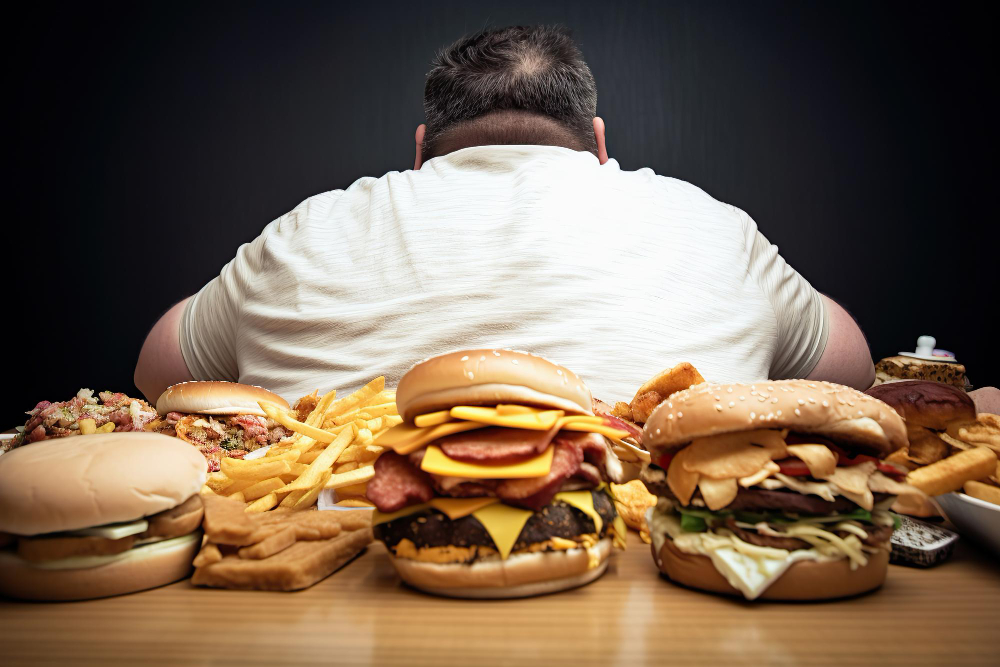


Learning how to stop binging is a process of physiological and psychological rehabilitation, not a test of willpower. Binge eating—defined as consuming large quantities of food in a short period while feeling a loss of control—is rarely a result of gluttony.
- 1. Stop restricting your food
- 2. Follow a regular schedule
- 3. Identify emotional triggers
- 4. Increase protein intake
- 5. Remove visual cues
- 6. Sleep seven hours
- 7. Hydrate before eating
- 8. Address metabolic adaptation
- 9. Eat high fiber foods
- 10. Pause before reacting
- 11. Practice self-compassion
- 12. Seek professional help
- Conclusion
- You May Also Like:
- Frequently Asked Questions
Instead, it is frequently a biological survival mechanism triggered by restriction, hormonal imbalances, or emotional distress.
When the brain perceives a scarcity of calories or nutrients, it upregulates hunger hormones and downregulates satiety signals, creating an overwhelming urge to consume high-energy foods.
To stop this cycle, you must shift your focus from “control” to “care.” If you want to stop binging effectively, the goal is to convince your nervous system that food is abundant and that you are safe.
This article outlines a comprehensive, medical-style protocol to interrupt the binge-restrict cycle. We will examine the importance of mechanical eating, the role of macronutrients in satiety, and the environmental changes necessary to support recovery.
By implementing these structured, evidence-based steps, you can begin to rewire the neural pathways associated with disordered eating and establish a neutral, healthy relationship with food.
1. Stop restricting your food
The most common precursor to a binge episode is dietary restriction. This is known as the “diet-binge cycle.” When you severely limit calories or cut out entire food groups, the body enters a catabolic state that the brain interprets as famine.
In response, the hypothalamus increases the production of Neuropeptide Y, a potent appetite stimulant that specifically drives cravings for carbohydrates.
To halt this biological drive, you must cease restrictive dieting immediately. This does not mean eating without boundaries, but rather eating enough energy to support your basal metabolic rate.
Research published by Polivy and Herman (1985) on Restraint Theory demonstrated that cognitive restriction (mentally classifying foods as “bad” or “forbidden”) directly leads to disinhibited eating or binging when those rules are inevitably broken.
Actionable Steps:
- Delete calorie tracking apps temporarily to remove the focus on numbers.
- Reintroduce “fear foods” in controlled environments to neutralize their power.
- Ensure you are eating at least three full meals per day.
2. Follow a regular schedule
erratic eating patterns disrupt the body’s hunger cues (ghrelin) and fullness cues (leptin). When you skip breakfast or push through hunger pangs in the afternoon, you create a caloric deficit that accumulates by evening.
This phenomenon, often called “backloading,” leads to intense, uncontrollable hunger at night, which is when most binge episodes occur.
“Mechanical eating” is a clinical strategy used to restore hunger cues. This involves eating at set times regardless of whether you feel intense hunger.
By providing the body with consistent energy, you stabilize blood glucose levels and prevent the primal urge to overconsume.
Sample Schedule:
- 08:00 AM: Breakfast (Protein + Fiber)
- 12:00 PM: Lunch (Carbs + Protein + Fat)
- 03:30 PM: Snack (Fruit + Nut butter)
- 07:00 PM: Dinner (Vegetables + Protein + Starch)
3. Identify emotional triggers
While biological hunger is a primary driver, emotional dysregulation is a significant secondary cause. Many individuals use food as a soothing mechanism to numb feelings of anxiety, loneliness, or boredom.
This is because palatable foods release dopamine in the brain’s reward center, providing temporary relief from negative emotions.
To stop binging driven by emotion, you must identify the “antecedent”—the event or feeling that happens immediately before the urge to eat arises.
The HALT Method:
Before opening the pantry, ask yourself:
- Hungry: Is this physical hunger? (Stomach growling, low energy)
- Angry: Am I frustrated or resentful?
- Lonely: Do I need connection?
- Tired: Do I need sleep or a break?
4. Increase protein intake
Protein is the most satiating macronutrient. It triggers the release of satiety hormones such as Peptide YY (PYY) and Glucagon-like peptide-1 (GLP-1), which signal the brain to stop eating. A diet low in protein often results in constant “food noise” or the feeling that you are never quite satisfied.
A study published in The American Journal of Clinical Nutrition (2011) found that increasing dietary protein intake to 25% of total calories significantly reduced obsessive thoughts about food and late-night snacking desire in overweight men. By anchoring every meal with a solid source of protein, you physically dampen the urge to binge.
High-Satiety Sources:
- Chicken breast or turkey.
- Greek yogurt or cottage cheese.
- Eggs and egg whites.
- Tofu, tempeh, and edamame.
5. Remove visual cues
Our environment dictates our behavior more than we realize. If your kitchen counters are lined with open boxes of snacks, candy, or highly palatable processed foods, you are relying on willpower to resist them every time you walk by. Willpower is a finite resource that depletes throughout the day; eventually, it runs out.
“Stimulus control” involves altering your environment to make binging difficult and healthy eating easy. This is not about banning food, but about adding friction to the behavior you want to stop.
Kitchen Reset Guide:
- Store snack foods in opaque containers or high cupboards.
- Place fruit and vegetables at eye level in the refrigerator.
- Do not eat directly from the package; always plate your food to register the quantity visually.
6. Sleep seven hours
Sleep deprivation is a direct hormonal disruptor that promotes binge eating. When you do not get adequate rest, your body produces more ghrelin (the hunger hormone) and less leptin (the fullness hormone).
Furthermore, the prefrontal cortex—the part of the brain responsible for impulse control and decision-making—functions poorly when you are tired.
Research from the University of Chicago (2004) highlighted that sleep-deprived individuals crave high-carbohydrate, calorie-dense foods specifically. Prioritizing sleep is not just about energy; it is a fundamental intervention for appetite regulation.
7. Hydrate before eating
The signals for thirst and hunger are generated in the same area of the brain (the hypothalamus) and can sometimes be confused. Mild dehydration can present as a false sense of hunger or sugar cravings.
While water is not a replacement for food, maintaining adequate hydration ensures that the hunger signals you feel are genuine.
Hydration Strategy:
- Drink one glass of water immediately upon waking.
- Drink a glass of water 20 minutes before a meal.
- Carry a water bottle to prevent thirst from escalating.
8. Address metabolic adaptation
One of the physiological hurdles in recovering from disordered eating patterns is the state of metabolic adaptation.
Years of oscillating between caloric overload (binging) and severe restriction can leave the metabolic rate downregulated, leading to lethargy and energy crashes that often trigger the next urge to eat.
While behavioral changes are the primary treatment, re-establishing a consistent metabolic rhythm is equally important.
In this specific phase of physiological reset, some individuals opt to utilize distinct nutritional formulations to assist the body’s transition. KeySlim Drops is a liquid-based supplement that is frequently discussed in the context of metabolic efficiency.
Unlike standard pills, its liquid delivery system is designed for rapid absorption, which can be beneficial for those whose digestive systems are sensitive due to irregular eating habits.
The formulation aggregates specific herbal extracts intended to aid in the efficient utilization of energy substrates.
For someone recovering from binging, the objective of using such a complementary aid is not to induce artificial weight loss, but to support the body’s natural energy production.
By helping to smooth out the peaks and valleys of energy availability, it may serve as a useful adjunct in stabilizing the physical sensations of hunger, allowing the individual to focus more clearly on the psychological work of recovery.
9. Eat high fiber foods
Fiber adds bulk to your meals and slows down digestion, which prolongs the feeling of fullness. Soluble fiber, found in oats, beans, and fruits, absorbs water and forms a gel-like substance in the gut.
This stabilizes blood sugar levels, preventing the rapid insulin spikes and crashes that often trigger a binge urge.
If your meals are calorically dense but low in volume (e.g., fast food), your stomach’s stretch receptors may not trigger satisfaction. Adding volume through vegetables and fiber signals the brain that you have eaten enough.
| Fiber Source | Benefit |
| Chia Seeds | Expands in stomach, high satiety. |
| Broccoli | High volume, low calorie, requires chewing. |
| Lentils | Combination of fiber and protein. |
| Berries | Satisfies sweet craving with fiber buffer. |
10. Pause before reacting
The urge to binge is often described as a “wave.” It builds in intensity, peaks, and then subsides. Many people give in to the urge as it is rising because they believe it will increase indefinitely. This is known as “urge surfing.”
By implementing a mandatory waiting period, you engage the rational part of your brain. If you feel the compulsion to binge, tell yourself you can have the food, but you must wait 10 minutes.
During that 10 minutes, distract yourself with a non-food activity. Often, the intensity of the urge will decrease enough for you to make a different choice.
11. Practice self-compassion
Shame is the fuel for the binge cycle. After a binge, it is common to feel guilt, which leads to self-criticism (“I have no willpower,” “I am a failure”).
This negative self-talk leads to a resolution to restrict again tomorrow (“I won’t eat anything until dinner”), which inevitably restarts the cycle.
Breaking this loop requires self-compassion. If a binge happens, view it as data, not a moral failing. Analyze what happened: Did you skip lunch? Were you stressed? Use the information to adjust your plan for the next day, rather than punishing yourself with restriction.
12. Seek professional help
Binge Eating Disorder (BED) is a recognized medical condition. If you find that you cannot stop binging despite implementing these lifestyle changes, or if your eating behavior is causing significant distress and impacting your daily life, it is crucial to seek support from a healthcare provider or a licensed therapist specializing in eating disorders.
Cognitive Behavioral Therapy (CBT) is considered the gold standard treatment for binge eating and focuses on changing the thought patterns that lead to the behavior.
Conclusion

Learning how to stop binging is a journey of reconnecting with your body’s natural intelligence. It involves unlearning the restrictive habits that drive the survival brain to overconsume and replacing them with consistent, nourishing care.
By prioritizing mechanical eating, ensuring adequate protein and fiber intake, and addressing the emotional roots of your triggers, you can dismantle the urge to binge.
It is important to remember that recovery is rarely linear. There will be days where old patterns re-emerge, but these are not failures; they are opportunities to learn and refine your approach.
With patience, self-compassion, and the consistent application of these physiological and psychological strategies, you can break the cycle of obsession and find a peaceful, sustainable relationship with food.
You May Also Like:
- How to fix insulin resistance and balance blood sugar
- How to reduce hip fat with effective exercise and diet
- How to decrease cortisol levels for better sleep and health
Frequently Asked Questions
Why do I binge at night?
Nighttime binging is usually the result of “backloading” calories—not eating enough during the day. When energy intake is low in the morning and afternoon, the brain drives an intense urge to consume calories rapidly in the evening to meet daily energy needs.
How to stop sugar cravings?
To stop sugar cravings, focus on stabilizing your blood sugar. Ensure every meal contains protein and healthy fats, which slow digestion. Additionally, getting enough sleep is crucial, as sleep deprivation specifically increases cravings for sugary carbohydrates.
Is binging an eating disorder?
Binge eating can be a symptom of Binge Eating Disorder (BED), which is a clinical diagnosis characterized by recurrent episodes of eating large quantities of food, feeling a loss of control, and experiencing distress afterwards, without compensatory behaviors like purging.
What foods help stop binging?
High-volume, high-satiety foods are best. Lean proteins (chicken, fish, eggs), high-fiber vegetables (leafy greens, cruciferous veggies), and complex carbohydrates (oats, quinoa) help keep you fuller for longer and stabilize hunger hormones.
Can stress cause binging?
Yes. Stress triggers the release of cortisol, which can increase appetite and drive cravings for “comfort foods” high in fat and sugar. This is a biological mechanism where the body seeks quick energy to deal with the perceived threat.