


“Adrenal fatigue” is a term commonly used to describe a collection of non-specific symptoms, such as body aches, fatigue, nervousness, sleep disturbances, and digestive problems.
- Understand the root cause
- Identify common warning signs
- Stabilize your blood sugar
- Prioritize restorative sleep cycles
- Adjust your exercise intensity
- Incorporate key nutrients
- Reduce stimulant intake
- Set emotional boundaries
- Hydrate with electrolytes
- Address hidden inflammation
- Practice active relaxation
- Monitor your progress
- Conclusion
- Frequently Asked Questions
While conventional medicine often refers to this as HPA axis dysfunction (Hypothalamic-Pituitary-Adrenal axis dysfunction), the experience of feeling “burnt out” is very real for millions of people.
Learning how to treat adrenal fatigue requires a shift in perspective from looking for a quick fix to adopting a holistic lifestyle overhaul.
It involves addressing the chronic stress that has kept your body in a state of high alert for too long, depleting your reserves and disrupting your natural hormonal rhythm.
To effectively heal, you must look at the foundation of your daily life: how you eat, how you move, and how you rest. When your adrenal glands are overtaxed, they struggle to produce the correct amount of cortisol at the right times.
This leads to the “tired but wired” feeling many describe—exhausted all day but unable to sleep at night. The path to recovery is not about taking a single pill; it is about retraining your nervous system to feel safe again.
By implementing consistent dietary changes, prioritizing specific nutrients, and modifying your exercise routine, you can support your body’s natural ability to repair itself.
This guide provides a comprehensive, step-by-step approach to reclaiming your vitality and bringing your body back into balance.
Understand the root cause
To solve the problem, you must understand the mechanism. The adrenal glands sit on top of your kidneys and mobilize your body’s response to every kind of stress—physical, emotional, or environmental.
When you experience stress, your adrenals release cortisol. This is a survival mechanism. However, modern life often keeps this switch stuck in the “on” position.
According to a comprehensive review in the journal Psychoneuroendocrinology (2017), chronic activation of this stress response desensitizes the receptors in the brain, leading to an inability to regulate cortisol levels effectively. This is what leads to the crash. Treating this condition means removing the stressors that keep triggering this alarm system.
Identify common warning signs
Recognizing the specific signals of adrenal strain helps you track your progress. These symptoms often develop slowly over years of high-pressure living.
- Morning grogginess: Difficulty waking up, even after a full night’s sleep.
- Salt cravings: A strong desire for salty snacks, often due to electrolyte imbalances regulated by the adrenals.
- Afternoon crash: A distinct drop in energy between 2:00 PM and 4:00 PM.
- Low stress tolerance: Small irritations cause disproportionate emotional reactions.
Stabilize your blood sugar
Dietary stress is one of the biggest burdens on the adrenal glands. Every time your blood sugar spikes and crashes, your adrenals must pump out cortisol to stabilize glucose levels. This creates a roller coaster that prevents healing.
To support recovery, you must eat to maintain a flat glucose curve. This means never eating carbohydrates “naked” (alone). Always pair them with protein and healthy fats. This slows absorption and prevents the emergency signal that triggers cortisol.
The Balancing Plate Strategy:
| Component | Example Foods | Why It Helps |
| Protein | Chicken, eggs, tofu | Provides building blocks for repair |
| Healthy Fats | Avocado, olive oil, nuts | Slows digestion and sustains energy |
| Fiber | Spinach, broccoli, berries | Regulates blood sugar release |
| Complex Carbs | Quinoa, sweet potato | Prevents rapid insulin spikes |
Prioritize restorative sleep cycles
Sleep is when the HPA axis resets. However, many people with adrenal issues struggle to stay asleep because their cortisol rises at the wrong time (like 3:00 AM).
To fix this, you must be strict about your circadian rhythm. A study conducted by the University of Chicago (2015) highlighted that sleep restriction significantly elevates evening cortisol levels, which perpetuates the cycle of fatigue. You need to create a “darkness window.”
- Limit Blue Light: Turn off screens two hours before bed.
- Cool Environment: Keep the bedroom temperature around 65°F (18°C).
- Morning Light: Get 10 minutes of sunlight immediately upon waking to anchor your cortisol awakening response.
Adjust your exercise intensity
When you are healthy, high-intensity interval training (HIIT) can be beneficial. However, when you are learning how to treat adrenal fatigue, intense cardio can be detrimental. It mimics the “fight or flight” response, adding more load to an already overburdened system.
Switch to restorative movements. Walking in nature, restorative yoga, and light swimming are ideal. These activities stimulate blood flow and lymph drainage without spiking cortisol.
The goal is to leave your workout feeling energized, not depleted. If you need a nap after exercising, you have pushed too hard.
Incorporate key nutrients

Your adrenal glands require a high concentration of specific nutrients to function. During periods of stress, the body burns through these stores rapidly.
1. Vitamin C:
The adrenal glands store the highest concentration of Vitamin C in the body. It is essential for the production of cortisol.
2. Magnesium:
Known as the relaxation mineral, magnesium helps calm the nervous system and supports sleep.
3. B Vitamins:
Specifically B5 (Pantothenic Acid) and B6, which are co-factors in converting cellular fuel into energy.
Reduce stimulant intake
Caffeine is a loan on energy that you have to pay back with interest. It works by stimulating the adrenals to release adrenaline and cortisol. If your reserves are low, coffee acts like a whip on a tired horse.
Weaning off caffeine is often necessary. If quitting cold turkey causes severe withdrawal, try tapering down or switching to green tea, which contains L-theanine, an amino acid that promotes a calmer alertness. The goal is to have your energy come from cellular ATP production, not a chemical stimulant.
Exploring metabolic support: KeySlim Drops
As you navigate the lifestyle changes required to support your adrenal health, you may find that your metabolism feels sluggish.
This is a common side effect when cortisol levels have been imbalanced for a long time. While fixing your sleep and diet are the non-negotiable pillars of recovery, some people find value in adding complementary support to their routine.
KeySlim Drops is a liquid supplement designed to assist with metabolic function using a blend of natural herbs. It is not a cure for adrenal fatigue, but rather a tool that can act as a background support system.
The liquid formulation allows for easy absorption and can be a simple addition to your morning water habit.
For those feeling “stuck” despite making good dietary choices, a metabolic aid like this can sometimes provide a helpful nudge, working alongside your nutrition plan to support overall energy flow.
Set emotional boundaries
Adrenal fatigue is often found in “people pleasers” or those who have trouble saying no. Emotional stress is just as taxing as physical stress. Every time you overcommit, you trigger a stress response.
Recovery requires a period of “selfishness.” You must evaluate your obligations and ruthlessly cut out what is not essential. This is not about being lazy; it is about energy conservation.
- The 80% Rule: Only schedule 80% of your day. Leave 20% open for rest or unexpected events.
- Tech Detox: Designate specific times of the day where you are offline and unreachable.
Hydrate with electrolytes
Water alone is often not enough. When adrenals are weak, the body loses aldosterone, a hormone that tells the kidneys to hold onto sodium. This is why you might crave salt. Drinking plain water can flush out remaining minerals, making you feel worse.
Add a pinch of high-quality sea salt or pink Himalayan salt to your water in the morning. This supports blood volume and blood pressure, taking some of the mechanical load off your adrenal glands.
Address hidden inflammation
Chronic inflammation is a constant alarm bell for your immune system. If your body is fighting a low-grade infection, food sensitivity, or gut issue, your cortisol will remain elevated to control the inflammation.
Common culprits include gluten, dairy, and soy. Consider doing an elimination diet for 30 days to see if your energy lifts. Research in the Journal of Inflammation Research (2020) suggests that systemic inflammation acts as a chronic stressor that can dysregulate the HPA axis over time. Healing the gut often leads to healing the adrenals.
Practice active relaxation
Sitting in front of the TV is “passive” relaxation. It does not necessarily lower your stress hormones. “Active” relaxation engages the parasympathetic nervous system (the “rest and digest” mode).
Techniques to try:
- Box Breathing: Inhale for 4, hold for 4, exhale for 4, hold for 4.
- Epsom Salt Baths: The magnesium absorbs through the skin, and the warm water relaxes muscles.
- Journaling: getting worries out of your brain and onto paper can stop the mental loops that keep cortisol high.
Monitor your progress
Healing is non-linear. You will have good days and bad days. It takes time—often 6 to 12 months—to fully repair the HPA axis dysfunction.
Do not judge your recovery by how much you can do, but by how you feel doing it. Are you waking up with a little more ease? Is the afternoon slump less severe? These are the victories. Be patient with your body; it is working hard to repair years of imbalance.
Conclusion
Learning how to treat adrenal fatigue is ultimately a lesson in listening to your body. The symptoms you are experiencing are a request for rest and a change in pace.
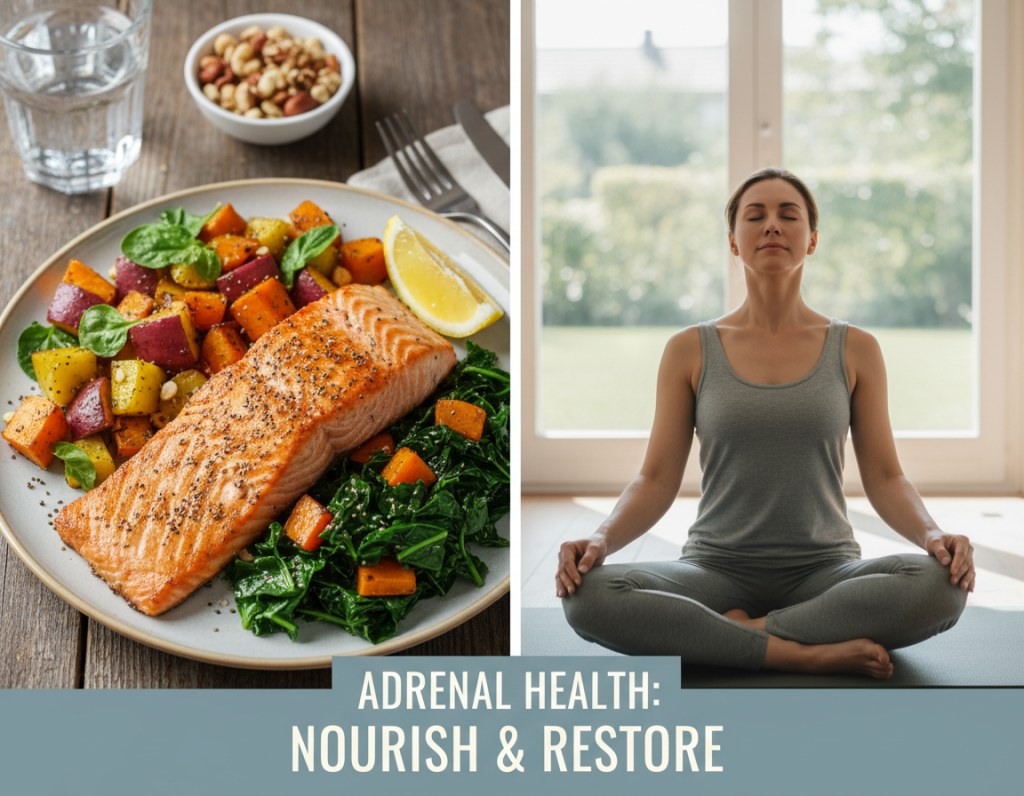
By stabilizing your blood sugar with balanced meals, prioritizing dark and cool sleep environments, and engaging in gentle, restorative movement, you remove the constant pressure on your adrenal glands.
This process requires patience and a commitment to yourself. It is about building a lifestyle that supports energy production rather than energy extraction.
As you implement these strategies—reducing stimulants, managing emotional boundaries, and nourishing your body—you will find that your resilience returns.
You are not broken; you are simply depleted. With the right care and consistency, your body has the profound capacity to heal and return to a state of vibrant energy.



Frequently Asked Questions
How long to recover?
Recovery time varies based on severity. Mild cases may improve in 1-3 months, while severe burnout can take 6 months to a year of consistent lifestyle changes.
Are vitamins helpful?
Yes. Vitamin C, Magnesium, B-Complex vitamins, and adaptogenic herbs like Ashwagandha are frequently used to support adrenal function and stress resilience.
Is coffee harmful?
For those with adrenal fatigue, caffeine can be harmful. It forces the adrenals to release cortisol, which depletes reserves further. It is best to minimize or eliminate it during recovery.
How to test adrenals?
The most accurate way is often a 24-hour saliva test or a dried urine test (DUTCH test), which measures cortisol rhythm throughout the day, rather than a single blood draw.
Can exercise help?
Gentle exercise like walking and yoga helps. However, intense cardio or heavy lifting can spike cortisol and worsen symptoms if the body is already exhausted.